Sunday, December 2, 2018

The meaning behind Creativity and some examples


Image result for creativity


Creativity is what makes humans stand out among other species. We as human beings use creativity in our everyday lives without even realizing it. When you wake up in the morning and you put together an outfit that suits your mood for the day, that is an act of creativity. When you are just doodling during a meeting at work or in class, that is an act of creativity; and everyone is creative. Although, we are all creative we all don’t view creativity in the same way. The value you see in creativity depends on what you think is valuable. For example, you may believe that it is better to win the art fair by imitating a work that you have seen before because you ended up winning. But, others may believe that the person who came up with something never seen before, a new way of painting with new mediums, creativity is of more value. Because creativity is at its peak when you form a completely new idea or innovation. These new ideas and innovations can come from anything that sparks an interest in the creator.
With new ideas and innovations being made every day the concept behind creativity was finally made. Two researchers found that they could put all types of creativity into a model called the Four-c Model. This model states that creativity has four types: Big-C,Little-c,mini-c,Pro-c. Each of these different from the next. Big-C creativity deals with creative greatness and genius. Little-c involves a creative act done by an average person. While mini-c is the difference between a 1st graders insight on astronomy and a senior in high schools insight on astronomy. Both having valid input but one person’s input (the senior) is of more value because of their level of thinking. Lastly Pro-c which involves the difference between someone that has mastered a skill but is just not well known for the mastery of that skill when compared to someone well known for their mastery. This is the difference between a professor that has mastered their subject but will never be as well-known as the person that made the theories they use to come up with their new research and studies. With all these categories of creativity, people will now be able to compare what they believe is everyday creativity (Little-c) to creative greatness (Big-C).

Now that you know what the academic world is defining creativity as you can make your own decisions as to what fits in each category and whether or not you believe these categories fulfill all aspects of creativity. You can decide if everything creative can be confined to this model or you can think of a new concept or think of nothing at all. That’s the whole idea behind creativity you are the one forming new opinions and coming up with new concepts that interest you. You determine what is creative.


Everyday Creativity


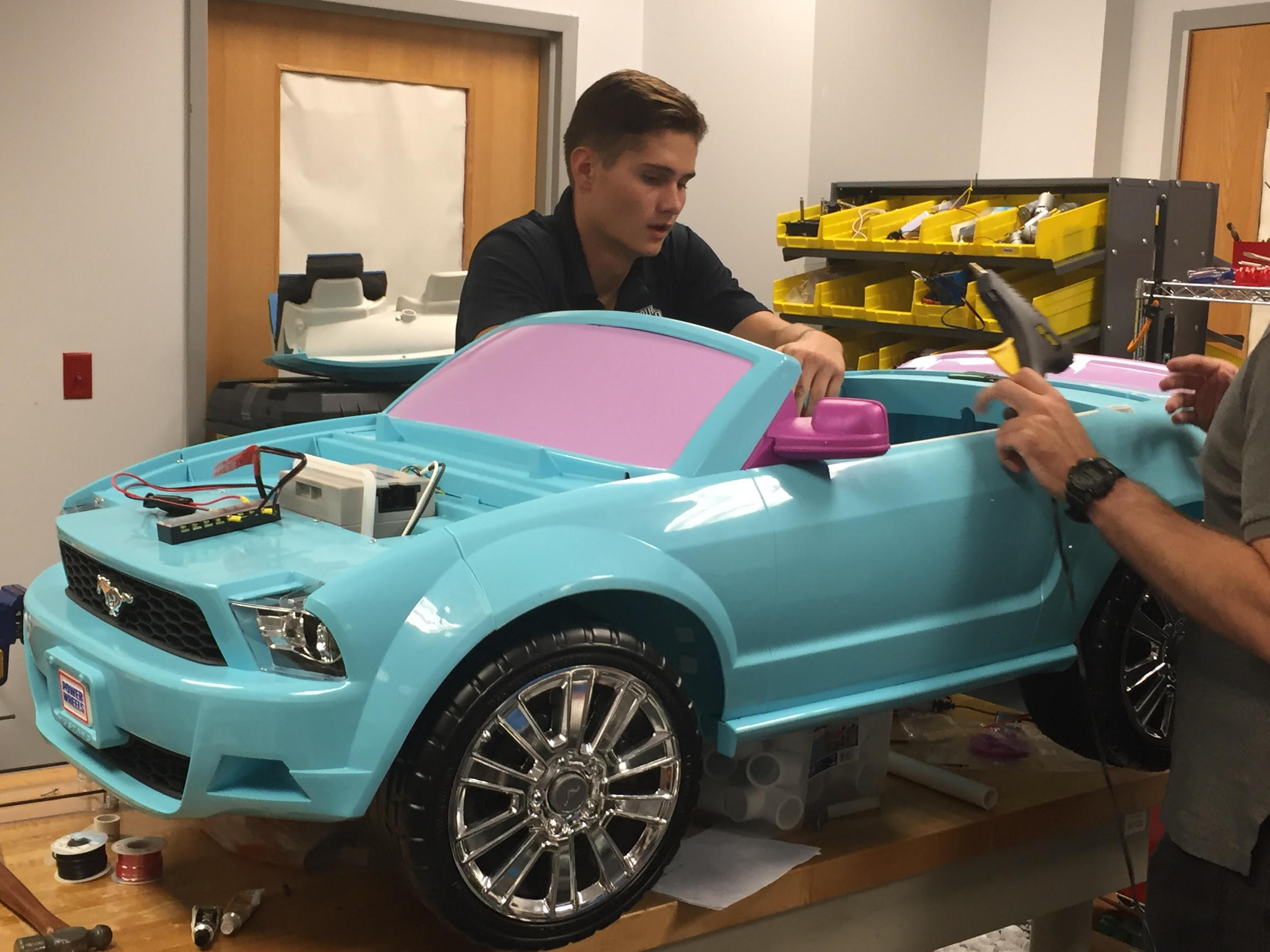
The definition of creativity is the use of imagination or original ideas; however, creativity can be expressed in so many different ways. Just throughout the day people use creativity so many times without even knowing, as I have made the transition from high school to college there are more ways to express your creativity in college. For an example, the physical therapy students and the engineering students use their academic innovation to be creative. They do that by creating toy cars for kids that have disabilities, the physical therapists diagnose the kid’s disability and what they can and cannot do and share that information with the engineers. The engineers use the information from the physical therapy students and create a toy car customized for a kid with the certain disability so he can still be like all the other kids and have fun with a toy car.

There are so many different ways of showing your creativity in college, you can join a fraternity or a sorority, or even a club if you want to express your creativity. They each have their own way to keep the members involved and each member is able to express their ideas of creativity. A lot of clubs, sororities and fraternities do a lot of fundraisers which is a great way for them to express their creativity and academic innovation. Fundraisers are great because you can use your imagination, there are no restrictions. Creativity is not something that you have or you don’t, it is something that anyone can have if they want.  

Creativity and College

Creativity is used in many aspects of life like economics, arts, and education. Creativity is important because it allows people to come up with solutions to problems which helps with the growth of the world around us. Creativity can be defined as small things that you do every day like painting or floral arrangement. Or creativity can be defined as large field changing ideas.

Everyday creativity is important in college because it opens your mind to new ideas that could be used for helping you with things like college assignments or separate problems that affect your life outside of college. Academic innovation is important in college because it brings new ideas to the teaching of students making the process of learning easier. This helps students learn and could show students new ways of learning that may be helpful in their life.

In college, universities are using academic innovation and are developing innovation centers for improving student success. Innovation centers try to improve student success by implementing new ideas like revamping courses and training professors to teach students with active learning in mind. Colleges display academic innovation by doing things like cross-disciplines, experimental and community-connected projects, and new learning opportunities.


When practicing everyday creativity, you develop new ideas about those activities. This is important because it shows you more options that can be done and explore more solutions to problems. It’s important to not just learn using new tools but to innovate and utilize the tools you currently use in a new way. This is how you can promote and grow your knowledge at a faster rate than before. Being able to innovate your learning process and make it better can transfer into how you acquire knowledge in the world outside of college or inspire you to come up with new ideas for learning outside of college. Innovating how you gather knowledge from new and different sources is what helps you grow and allows you to learn the most amount of ideas that you could utilize in your life.

Saturday, December 1, 2018

Creativity on College Campuses

     Creativity is defined as the use of the imagination or the creation of original ideas. It can be expressed multiple ways, and everyone uses it differently and for different things. One thing that I noticed when I got to college was that creativity had not disappeared and it was still very much present in everything we did. Each day at college I saw how James C. Kaufman and Ronald A. Beghetto’s four-c model of creativity was used. Kaufman and Beghettos claimed that there were four parts to creativity and each one was a different level. Each different level of creativity is expressed all over college campuses. Sororities and fraternities are good examples of creativity on college campuses. They each have their own creative ways to keep the members involved in their courses and activities happening on campus, whether it be through the semis, fundraisers, or the big and little program. Fundraisers are especially a big way of showing creativity. There are no limits or expectations on how to do a fundraiser, so sororities and fraternities can use their imagination and come up with their own creative ideas. Athletics are also a good example of creativity on college campuses. Players can use creativity while practicing, watching film, and executing plays. To be their own self and play how they want to play they have to use their imagination and creativity. Creativity helps students and athletes succeed in college and can lead to future success. Using sports and activities, everybody will express their own creativity in a different way. Not all will be classified as having Big-C or Little-C creativity. Thats why Kaufman and Beghetto created the Pro-C and Mini-C of creativity. It gives those who don't fit in the Big-C or Little-C to still be classified as being creative and using their mind and imagination. 

Creativity Everyday

When I look at my phone every day I can only think; whoever thought to make this little box thing? From playing with Pokemon cards in the schoolyard as a kid to now driving around playing Pokemon Go on my phone, the technology from the last ten years is jaw-dropping. Now that I'm in college attending the University of North Florida, I see how every generation has a new set of goals that are driven by the last generations creative ideas. I have seen that college is the starting point for new technology through academic innovation. Academic innovation can be defined as faculty and students seeking to build or use the knowledge and skills to create and affect things in interesting and positive ways, while the pure definition of creativity seems to be missing. These two concepts go hand-in-hand and can be seen at thousands of universities across the United States.
Image result for creativity together
          One specific of academic innovation example is the engineering students at UNF are making electronic toy cars for children with disabilities. These little toy cars designed by students have high-tech features to match those of the life-size versions. These students, ones just like you and I, all have different creative ideas that blossom into something that our and past generation find astounding.
UNF mechanical engineering student Kristian Sipos works on a car for a young child with disabilities.
What studies have shown is that the idea of creativity is a cloud that can “rain” down many sub-categories with different kinds of creativity. The idea of creativity can be seen as a “pass or fail” type of topic but instead, should be seen as many different types of creativity based on the action being performed. Practicing academic innovation is an extremely complex task, the 21st century's technology is only increasing because of this practice.

Our Environment and Our Creative Voice

        Every day, every moment, our brains our processing massive amount of data and deciding what to do with that data. We, as members of a society, send out information to each other in any creative form we have available to us. Every card we send, or movie we recommend, or carefully crafted text is a creative form of sending information to one another. We enjoy receiving new interesting ideas from others, as well as seeing others enjoy what we give them. This supports us sharing creatively among ourselves every moment.  But is this really effective? Does it really support creativity, or just doing what we expect others want to see?

There is so much we don’t tell each other, so much we carry with us that we don’t think anyone should know. This leads to blind spots in knowledge. We keep information to ourselves to play it safe. Sometimes it’s to avoid an argument, or to save someone’s feelings, or just to save ourselves expected embarrassment. Our environment supports this, especially on college campuses. In so few classes can we vary far from the guidelines. We are allowed to, no one is telling us we’ll fail or that certain new ideas will be met with harsh criticism. We just get the feeling. The feeling that it isn’t worth the risk. Why would we put forth someone new, something against the grain, when the alternatives are tried and true? If we vary to much from the mean, we know we’ll stick out. We see others that stick out, most of us can’t even imagine being like them. We would hate to expose ourselves like them, leave ourselves bare, be judged by others as we have judged. We would much rather watch what succeeds and attempt our best emulation.

This is where the problem originates. We all just emulate what is right, what we see our environment accept. This leaves us all with the same voice, the one we use to play it safe. This is hardly the creative voice we want from others. Yet by not truly letting others know they’ll be accepted, that ideas beyond convention can be added to the conversation, we practically forbid it. When we learn a craft, much of that learning is simply to focus our voice, make it digestible for others. This takes out our true voice, and the rest of our learning is to make is successful. We learn how to make it seem new and creative.  We add to the problem. It’s the same logic that keeps Dictators in power. Not that any one person is in charge or commanding us, but it is the environment we create for ourselves that dictates us. A Dictator rules through power and fear. But where does that power and fear lie? In those who work under them, also held by power and fear. If everyone together tried to over through the Dictator, he would be powerless, he is just a man. It is too with this fear. It is nothing, we create it, but it rules over us. The only solution to this problem is revolution. Every voice saying what they truly think. Only then can we have true creativity.

It isn’t our fault. As humans, our basic instincts say to follow the pack, be safe, agree with those in charge. It isn’t our bias or upbringing, but our own adaptations that have sentences us to live with this fear. This isn’t a fear of failure, or of others, but of ourselves, and what we truly think.

The 4 Stages of Creativity

When you think of someone as 'being creative', we automatically assume that they are creating new ways to look at the world around us either through art or science. This narrow thinking, however, is not always an entirely accurate way to describe someone's creative capabilities. A simple decision of what tie to wear is a perfectly good example of creativity being performed on a daily basis. These different acts of creativity can be broken up into four levels to measure; min-C, little-C, pro-C, and big-C. The two researchers that came up with the 4 C model were James Kaufman and Ronald Beghetto, the authors of Beyond Big and Little; the Four C Model of Creativity. Their model attempts to break down the original two broad levels of creativity, big-C and litle-C, so that creativity can be more accurately measured.The little-C is commonly associated with everyday creativity, like performing your job at your workplace. Big-C is for those individuals that have mastered a subject and is noticed for it, whether it they found an alternative treatment for cancer with positive results or they wrote a hit song heard on the radio. Mini-C is below the little-C level and consists of the creative process that someone goes through when learning a subject, like learning to tie a tie. Pro-C is between little-C and big-C and is for those who have surpassed others in the subject but has not yet mastered the field enough to be recognized for it. In consideration with these different levels of creativity that are measured, it is safe to say that we are all creative at least once a day, even if you don't realize that you are. The decisions to study art, to change your hairstyle, or to start a family are what make us unique and creative in our lives.

Welcome to the Blog!

Hello and welcome to the Creativity in Everyday Academic Life blog. This blog is a place for students in ENC 1101 to share their final cours...